
Buying Peptides in Germany: 7 Criteria for a Reputable Laboratory Supplier in 2026
Seven concrete criteria that laboratories in Germany can use in 2026 to distinguish a reputable supplier of research peptides from an unreliable one.
Dr. Lisa Weber
Scientific Editorial Team
M.Sc. Biochemistry, 8+ Years Peptide Research
Anyone looking to source research peptides for a laboratory project in Germany in 2026 will encounter a market ranging from established laboratory suppliers to short-lived single-product shops. The marketing claims are almost identical everywhere: high purity, fast delivery, "tested quality." However, for a laboratory that requires reproducible results, marketing promises do not matter; what matters is whether these statements can be verified using concrete documentation.
Selecting a supplier is therefore not a price comparison, but a risk assessment: a cheap vendor without reliable batch documentation can end up being more expensive than an established supplier if a test series has to be repeated due to inconsistent batch quality.
The following seven criteria form a practical checklist to distinguish reputable from unreliable vendors—regardless of whether you are procuring BPC-157, Epitalon, or a rarer research peptide.
Criterion 1: Batch-Specific COA Instead of Marketing Copy
The single most important criterion is the availability of a Certificate of Analysis (COA) that can be unequivocally assigned to a specific batch—including lot number, analysis date, HPLC purity along with the method used, and mass spectrometry-confirmed molecular mass. A generic PDF without a lot reference is not proof, but merely a claim.
In their overview of peptide synthesis, Guzmán, Barberis, and Illanes point out that both the synthesis method and subsequent analytics significantly influence the result (Guzmán, Barberis & Illanes, Electronic Journal of Biotechnology, 2007)—which is why a meaningful COA should always state both: method and result.
Criterion 2: Named Third-Party Analytical Testing
An independent test by an external laboratory significantly increases the reliability of a purity specification—provided that the testing laboratory is named and the result is transparently documented. "Tested by a third-party lab" without further details is a marketing slogan, not proof.
D'Hondt and colleagues demonstrate in their study on related impurities in peptide active substances how drastically impurity profiles can vary depending on the synthesis route (D'Hondt et al., Journal of Pharmaceutical and Biomedical Analysis, 2014). An independent second opinion is therefore particularly useful for new suppliers or new batches before larger quantities are ordered for an experimental series.
Criterion 3: Company Location, Legal Notice, and Legal Transparency
A supplier based in Germany or the EU is subject to a full legal notice (Impressum) under German law, including an address for service of process, commercial register entry, and VAT identification number. If such a legal notice is missing, or if it points to a P.O. box without a recognizable business address, there is no reliable contact point in the event of a complaint or legal dispute.
Furthermore, chemicals—which include synthetic peptides—are subject to REACH Regulation (EC) No 1907/2006, which governs, among other things, the provision of Safety Data Sheets. A vendor unable to provide these upon request falls below expected legal minimum standards.
Criterion 4: EU Shipping and Delivery Times
A warehouse located within the EU not only shortens delivery times, but also reduces the risk of customs delays, as the goods have already cleared customs within the EU internal market. For a lab with strict experimental timelines, this planning certainty is often far more important than a slightly lower product price from a non-EU vendor.
- Warehouse and shipping within the EU as a standard rule
- Realistic, not overly exaggerated delivery time estimates
- Trackable shipment number right from dispatch
- Cold chain transport when required, clearly communicated
Criterion 5: Product Documentation and RUO Labeling
A reputable laboratory supplier clearly labels every product as "Research Use Only" (RUO) and avoids any phrasing suggesting human application—no dosage recommendations for humans, no implicit health or therapeutic claims. This labeling is not only legal protection for the supplier, but also an indicator that the vendor understands their target audience and regulatory obligations.
In addition to the COA, complete product documentation includes details on storage, molecular formula, CAS number (if available), and, where applicable, instructions on reconstitution with bacteriostatic water for in vitro applications.
Criterion 6: Customer Service and Complaints Handling
Functional customer service is demonstrated not in marketing copy, but when issues arise: How does a supplier react if a batch does not match the COA or if a shipment arrives damaged? Reputable suppliers specify a clear complaint procedure, respond promptly to inquiries regarding batch traceability, and offer replacement or reimbursement for justified complaints.
A test before placing the actual order—such as a specific inquiry regarding the analytical data of a particular batch—often reveals how transparent a vendor truly is even before purchase.
Criterion 7: Price Transparency Without Hidden Costs
| Feature | Reputable Supplier | Red Flag |
|---|---|---|
| Final price | Clearly stated including shipping and taxes | Hidden customs fees disclosed only after purchase |
| Volume discounts | Transparent volume pricing tiers | Opaque "special promotions" without context |
| Payment methods | Established, traceable methods | Difficult-to-trace payment methods only |
In his overview of large-scale peptide manufacturing, Bray describes that synthesis, purification, and quality control account for a substantial portion of manufacturing costs (Bray, Nature Reviews Drug Discovery, 2003)—an indication that a realistic price is closely linked to analytics that have actually been performed.
Conclusion for Laboratory Practice
None of these seven criteria is conclusive on its own, but together they form a reliable overall picture: batch-specific COA, named third-party testing, transparent business location, EU shipping, clear RUO labeling, responsive customer service, and transparent pricing. A laboratory that verifies these points prior to its first order reduces the risk of having to repeat an experimental series later due to inconsistent batch quality.
All substances mentioned in this article are strictly intended for research purposes (Research Use Only, RUO). They are not approved for human use, no dosage recommendations for humans are provided, and no therapeutic claims are made. Observations from cell and rodent models are preclinical in nature.
Related Products
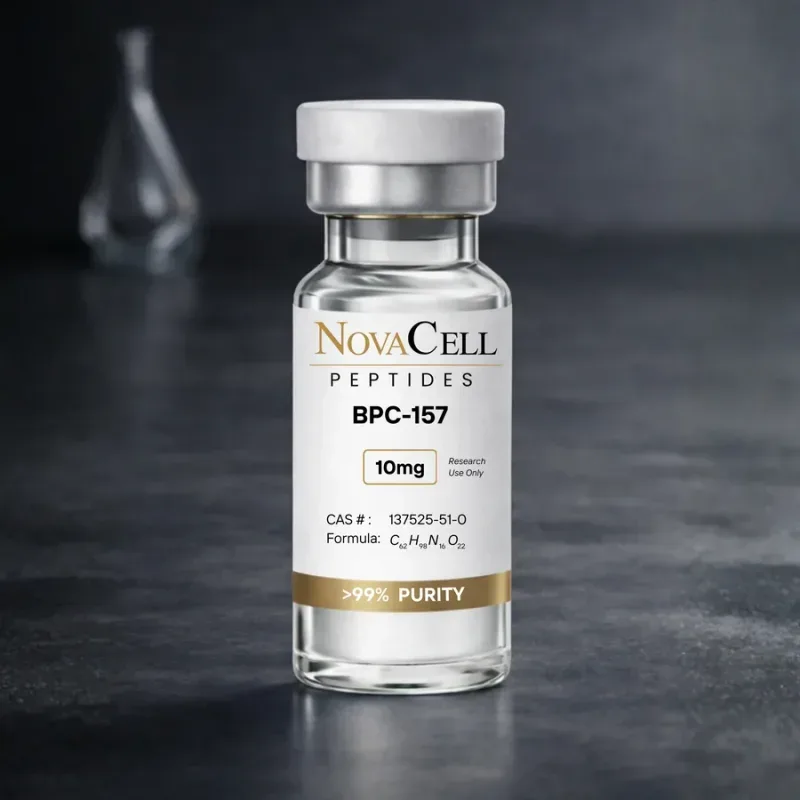
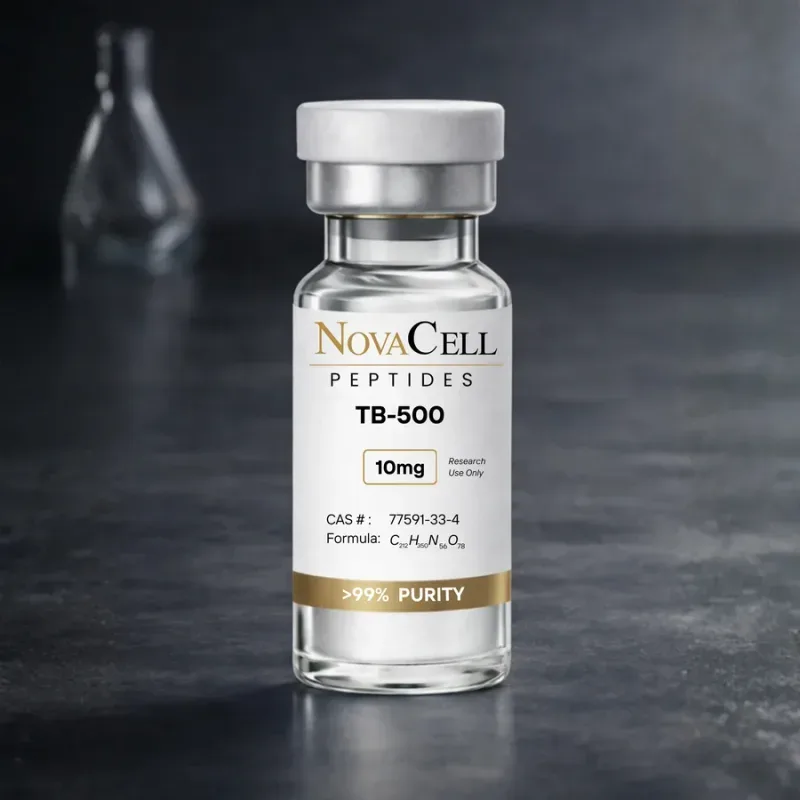
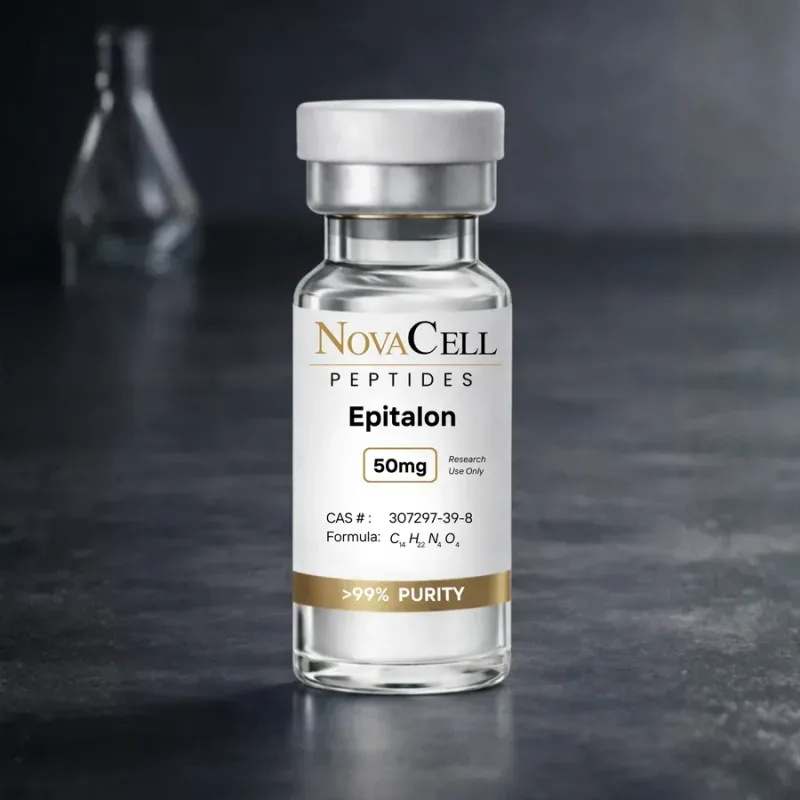
Checkout policy at a glance
- Shipping
- EU warehouse (Poland) for the EU countries we serve, Dubai warehouse (DAD) for UAE. Free shipping from 115 EUR order value before discount; otherwise from 12.99 EUR depending on destination. No shipping outside these regions.
- Bank transfer (NCBL Sciences OÜ)
- SEPA / IBAN via NCBL Sciences OÜ (Estonia/Lithuania). Tip: for Revolut use the LT IBAN. Payment window 3 business days.
- Crypto (NOWPayments)
- BTC, ETH, USDT and others via NOWPayments. 3 % discount when paying with crypto. No card payments.
Related articles
Deepen your RUO knowledge with curated follow-up reading.
Buying Peptides in Europe 2026: Tesamorelin and Triple-G in Research
Tesamorelin and Triple-G as research peptides: procurement, customs, COA documentation, and supplier selection for European laboratories in 2026.
Retatrutide as a Research Peptide: The GIP/GLP-1/Glucagon Tri-Agonist for EU Laboratories
Retatrutide as a GIP/GLP-1/glucagon tri-agonist for research: mechanism of action, HPLC purity, COA certificate, and the RUO framework for purchasing in the EU.
RUO vs. GMP: What Actually Makes the Difference in Peptide Production
Comparing RUO and GMP: Which requirements actually apply to documentation, purity, and quality assurance for research peptides, and where the boundaries lie.
Further Resources
Legal Disclaimer
All content is for scientific and informational purposes only. The information presented is based on current research literature and should not be construed as medical advice.
No product is intended for human or animal consumption.